


Industrial manufacturing enterprises always face tricky hidden troubles when producing lightweight structural components. Uneven wall thickness, internal pores, insufficient dimensional accuracy, and easy deformation under high pressure frequently lead to frequent scrapping, extended production cycles, and uncontrollable after-sales maintenance costs. Most conventional die casting processes only pursue surface forming effects, ignoring internal structural compactness and long-term service stability, which directly causes frequent failures of mechanical parts in high-temperature, high-vibration and heavy-load working environments. Choosing reliable aluminum alloy die casting parts can fundamentally avoid these chronic production pain points and comprehensively upgrade the overall quality of finished assemblies.
Many buyers only focus on unit price when selecting die casting accessories, and overlook material purity, mold precision and post-processing standardization. Low-grade recycled aluminum materials contain excessive impurities, resulting in poor corrosion resistance, low tensile strength and easy cracking during assembly and operation. Ordinary die casting molds have large processing tolerances, making it impossible to match precision equipment assembly requirements. Long-term use will accelerate wear and gap deviation, affecting the entire operation stability of mechanical equipment. Professional customized die casting solutions provided by Sinofly Precision Casting strictly adopt high-purity original aluminum ingots, matching high-precision precision mold opening technology, and fully solve the inherent defects of inferior castings from the source of raw materials.
Internal air porosity is the most concealed fatal defect in aluminum die casting products. Such defects cannot be detected by simple surface inspection, but will cause air leakage, oil leakage, pressure resistance decline and fracture accidents after parts are put into operation. Conventional mass-produced castings lack vacuum die casting optimization processes, so pore rate remains high and cannot meet sealing, hydraulic and pneumatic component application standards. High-density die casting technology effectively reduces internal bubble residues, makes metal structure denser, and greatly improves pressure resistance, airtight performance and fatigue resistance of finished parts.
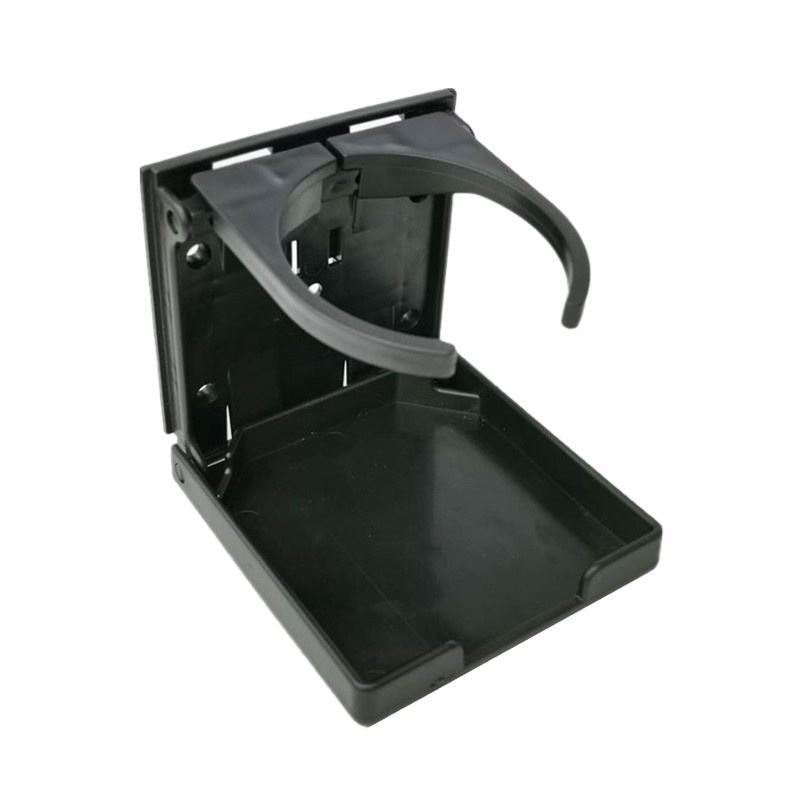
Dimensional consistency remains a core demand for mass batch matching production. Irregular shrinkage deformation after die casting cooling will lead to poor assembly fit, repeated trimming, low production efficiency and high labor waste. Non-standard post CNC machining cannot guarantee tolerance accuracy within micron range, resulting in unqualified matching precision of automotive parts, power equipment housings and mechanical structural parts. Integrated precision die casting + numerical precision finishing process controls overall dimensional deviation stably, realizing fully automatic batch production with ultra-high uniformity.
Corrosion resistance and environmental adaptability are deep hidden requirements that are easily ignored by downstream customers. Aluminum die casting parts used outdoors, in humid workshops, chemical environments and cold high-altitude areas are prone to oxidation, rust, peeling and aging. Simple surface spraying treatment falls off quickly, failing to protect the base metal for a long time. Multi-layer professional surface treatment processes including anodizing, powder coating and passivation form a stable protective film, greatly extending service life and adapting complex harsh working conditions all year round.
Core Performance Comparison of Ordinary Die Castings & Premium Precision Aluminum Alloy Die Castings
| Performance Indicator | Ordinary Recycled Aluminum Die Castings | High-Precision Custom Aluminum Alloy Die Castings |
|---|---|---|
| Raw Material Grade | Mixed recycled aluminum with high impurities | High-purity A356/ADC12 original aluminum alloy |
| Internal Pore Rate | High, easy to cause leakage and fracture | Ultra-low, vacuum degassing integrated forming |
| Dimensional Tolerance | ±0.15mm and above | ±0.02–0.05mm micron precision control |
| Tensile & Pressure Resistance | Low, easy deformation under heavy load | High strength, stable under high vibration and high pressure |
| Surface Treatment Durability | Easy to fade and fall off within short term | Wear-resistant, corrosion-resistant, long service life |
| Batch Consistency | Large difference between individual parts | Stable and unified quality in full batch production |
| Applicable Scenarios | Low-load ordinary accessories | Automotive parts, hydraulic equipment, intelligent machinery, precision housings |
Different downstream industries have differentiated hidden requirements for aluminum die casting structural parts. Automotive chassis accessories require shock resistance and lightweight integration; power device shells demand excellent heat dissipation and airtight sealing; automation mechanical parts pursue ultra-high matching precision and long-cycle wear resistance. Blindly selecting universal standard castings cannot adapt special working conditions, and will bring unexpected safety hazards and economic losses. Custom die casting design can adjust alloy ratio, wall thickness structure, mold structure and post-treatment scheme according to actual working parameters, achieving targeted performance matching.
Long-term comprehensive cost of die casting parts is far more important than single purchase price. Low-cost inferior castings bring frequent replacement, equipment shutdown maintenance, assembly rework and quality complaint losses, which greatly increase total operation cost. High-quality precision aluminum die castings reduce failure rate, shorten maintenance downtime, improve overall operation efficiency of equipment, and create continuous stable economic benefits for enterprises. Stable supply capacity also ensures uninterrupted mass production of customers, avoiding delivery delays caused by insufficient casting supply.
Strict full-process quality inspection runs through every link of die casting production. From raw material composition testing, mold size verification, internal structure flaw detection, surface quality inspection to finished assembly matching test, each procedure has standardized detection standards. Non-destructive testing technology accurately finds invisible internal cracks and pores, preventing unqualified products from flowing into the market. Complete quality assurance system ensures that each finished aluminum alloy die casting part meets industrial high-standard application specifications, fully matching EEAT practical application value and actual production service requirements.
Practical production experience proves that scientific die casting process matching is the key to solving long-standing quality problems of aluminum structural parts. Reasonable mold design reduces shrinkage defects, optimized casting temperature improves metal fluidity, standardized cooling process avoids deformation, and refined CNC finishing ensures assembly precision. Choosing professional customized precision die casting products helps enterprises avoid detours in component selection, reduce unnecessary quality risks, and realize stable, efficient and high-quality long-term production operation.